Journal / Technology
WhatsApp PDPA Compliance Malaysia (2026): Data Protection Guide for Business Messaging
Ensure your WhatsApp marketing and customer communications comply with Malaysia's Personal Data Protection Act (PDPA 2010 & 2024 Amendments). Avoid massive fines with proper opt-in protocols.
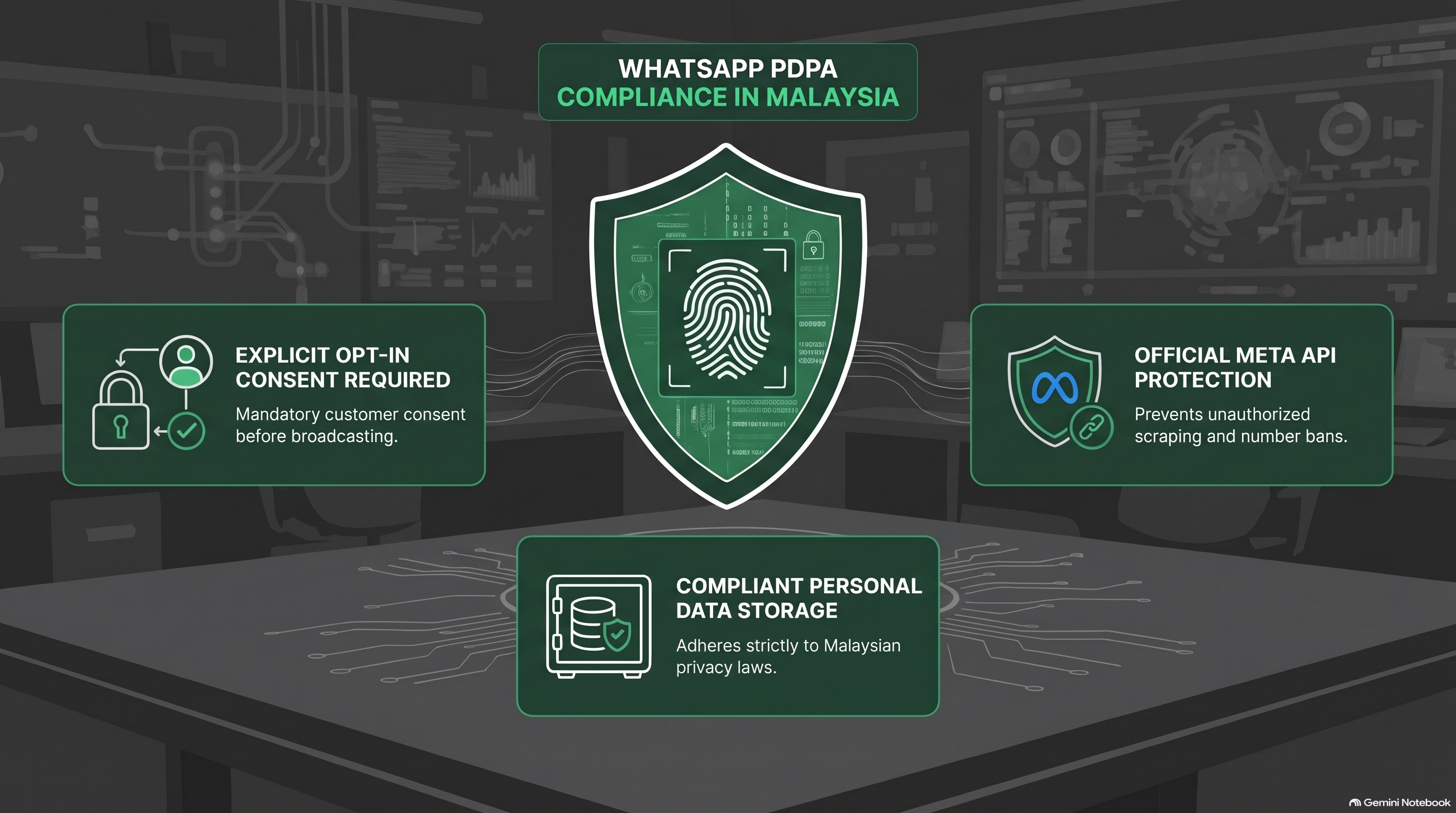
Quick Answer: Is WhatsApp Marketing Legal Under Malaysian PDPA?
Yes, WhatsApp business marketing is legal under Malaysia's Personal Data Protection Act (PDPA 2010), but only if your business secures verifiable opt-in consent from the data subject before initiating promotional broadcasts. With the passage of the Personal Data Protection (Amendment) Act 2024, penalties for corporate non-compliance have escalated up to RM 1,000,000 in fines and 3 years imprisonment. Businesses must maintain explicit audit trails of customer consent, provide immediate opt-out mechanisms, and store customer conversations in secure, encrypted cloud repositories rather than unmonitored employee smartphones.
The 7 Core PDPA Principles Applied to WhatsApp Business Messaging
The Malaysian Department of Personal Data Protection (JPDP) enforces 7 statutory principles that apply directly to digital messaging channels:
| PDPA Statutory Principle | Legal Requirement | Chattalyst Automated Solution |
|---|---|---|
| 1. General Principle | Cannot process personal data (phone numbers, full names) without explicit consent. | Automated opt-in timestamp logged upon first inbound greeting or web form submission. |
| 2. Notice and Choice Principle | Must inform users how their data will be used and offer clear opt-out options. | Every marketing template includes an automated 'Stop Promotions' quick-reply button. |
| 3. Disclosure Principle | Cannot share or sell WhatsApp customer databases to third parties without approval. | Encrypted multi-tenant database with strict zero data-sharing architecture. |
| 4. Security Principle | Must implement robust technical measures to prevent data leakage and theft. | Role-based access controls, TLS 1.3 encryption, and employee phone masking. |
| 5. Retention Principle | Cannot retain customer chat logs indefinitely once business purpose expires. | Customizable data retention and auto-anonymization policies (e.g. 12 or 24 months). |
| 6. Data Integrity Principle | Customer records must be accurate, complete, and regularly updated. | Two-way CRM synchronization ensures updated contact profiles across all systems. |
| 7. Access Principle | Data subjects have the right to inspect and correct their personal data upon request. | One-click data export and profile management tools in the admin dashboard. |
Major Changes Under the PDPA (Amendment) Act 2024
Malaysian businesses must prepare for key regulatory shifts introduced in the latest PDPA amendment bill:
- Mandatory Data Protection Officer (DPO): Organizations processing high volumes of personal data must appoint a designated DPO accountable for data governance.
- 72-Hour Mandatory Breach Notification: In the event of a customer data leak (such as an employee exporting customer phone numbers onto an unauthorized flash drive), businesses must notify the Commissioner within 72 hours.
- Increased Financial Penalties: Fines for non-compliance have been increased from RM 300,000 to RM 1,000,000, with personal liability for company directors.
- Direct Liability for Data Processors: Cloud software vendors and CRM platforms now share statutory liability alongside data controllers for unauthorized processing.
The Hazard of Running WhatsApp on Staff Personal Phones
Many Malaysian SMEs allow employees to communicate with clients using personal mobile phones. When an employee leaves your company, they retain thousands of customer phone numbers in their device address book. If that former employee contacts those clients on behalf of a rival firm, your business is liable under PDPA Principle 4 (Security) for failing to safeguard client personal data.
By routing all communications through Chattalyst's centralized WhatsApp API dashboard, customer data remains securely hosted in your corporate cloud environment with staff accessing the inbox through authenticated single-sign-on (SSO).
Best Practices for Legitimate WhatsApp Marketing Broadcasts
- Collect Documented Opt-In: Gather consent through website checkboxes, Click-to-WhatsApp ad triggers, or written in-store registration forms.
- Use Meta Pre-Approved Templates: Never send unsolicited promotional spam. Always use official Meta Marketing Templates with clearly identified business credentials.
- Honor Unsubscribe Requests Instantly: When a recipient taps 'Unsubscribe' or types 'STOP', your system must automatically blacklist their number from future broadcasts.
- Maintain Written Privacy Notices: Provide an easily accessible link to your company's PDPA-compliant Privacy Policy in your initial WhatsApp greeting.
Frequently Asked Questions
Can I buy a phone number list and send promotional WhatsApp messages in Malaysia?
No! Purchasing cold mobile phone lists and blasting unsolicited WhatsApp messages is illegal under Malaysia's PDPA 2010 and strictly violates Meta's Commercial Terms of Service. Doing so will result in instant phone number bans and expose your company to regulatory fines.
What constitutes valid opt-in consent under Malaysian law?
Valid opt-in requires an affirmative, informed action by the customer—such as checking an un-ticked consent box on your website, scanning an in-store QR code, or tapping a Click-to-WhatsApp ad to message your business first.
How does Chattalyst handle user opt-out requests?
Chattalyst includes automated opt-out parsing. When a customer replies with keywords like 'STOP', 'BERHENTI', or 'UNSUBSCRIBE', the platform immediately tags the contact as opted-out and blocks future marketing broadcasts automatically.
Is end-to-end encryption maintained when using the WhatsApp Cloud API?
Yes. All messages between the customer and Meta's secure Cloud API data centers are fully encrypted in transit using industry-standard TLS encryption.
Where is our customer data stored when using Chattalyst?
Chattalyst stores customer conversation data in ISO 27001-certified cloud infrastructure with strict data isolation, encryption at rest, and full adherence to Malaysian data sovereignty requirements.